Governance
How the Court of Arbitration for Sport Works: ICAS, the CAS Code and Ad Hoc Divisions
The Court of Arbitration for Sport (CAS) works as an arbitration body based in Lausanne that settles sports-related disputes under a set of procedural rules called the Code of Sports-related Arbitration, with its administration and finances overseen by the International Council of Arbitration for Sport (ICAS). It is not a state court. Parties reach it through an arbitration clause or through a federation's statutes, and its awards can be challenged only before the Swiss Federal Tribunal.
What does CAS decide and who sits on its panels?
CAS resolves contractual, disciplinary and governance disputes in sport. According to its own description, it handles about 900 cases a year across more than 50 sports, and it has dealt with more than 12,000 international and national sports-related procedures by the end of 2025.
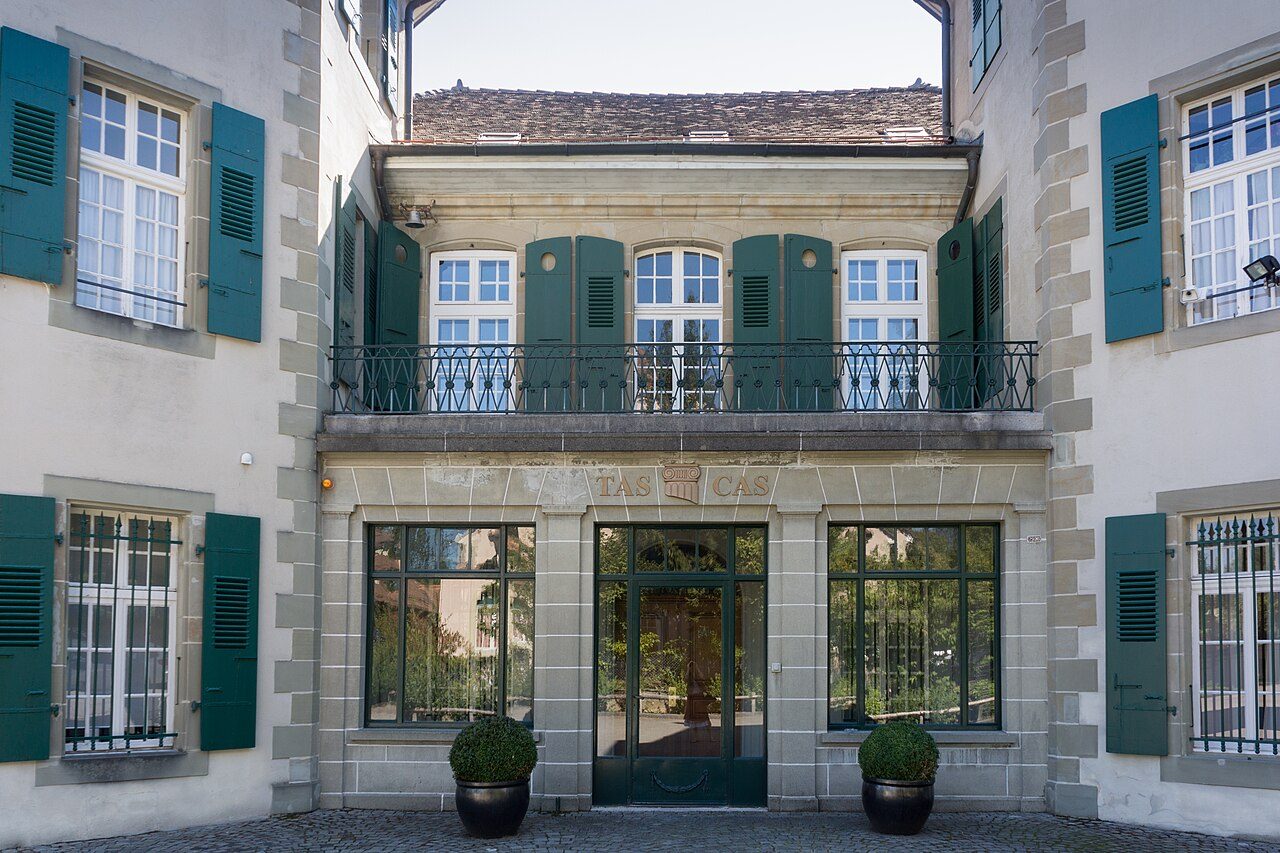
The Court Office, which runs the procedures and is headed by the CAS Director General, is based in Lausanne. The Code names Lausanne as the seat of the arbitration, and the working languages are French, English and Spanish.
CAS keeps a mandatory list of more than 500 arbitrators, anti-doping judges and mediators from almost 100 countries. Terms last four years and are renewable. Most cases are decided by a sole arbitrator or by a panel of three.
In an ordinary procedure each party nominates one arbitrator and those two choose the panel President. In appeals the President of the Appeals Division selects the panel President. A hearing is optional and may be held in person, virtually or in hybrid form, and parties can ask for expedited procedures, for example before a competition.
- Ordinary Arbitration, used when the parties have an arbitration clause or agree to submit a dispute after it arises
- Appeals Arbitration, used against decisions of a federation or sports body whose statutes provide for an appeal to CAS
- The CAS Anti-Doping Division, a first-instance body deciding cases under the World Anti-Doping Code
- Mediation, a non-binding procedure that ends only with a signed settlement agreement
What is ICAS and what does it do?
ICAS is the administrative and financial authority under which CAS operates. It exists to safeguard the independence of CAS and the rights of the parties. It has 22 members drawn from the Olympic movement, sports federations, athletes and the legal sector, and each member declares that they will act in a personal capacity, with objectivity and independence.
Its functions include appointing CAS arbitrators and approving the CAS budget and financial statements. Changes to the Code of Sports-related Arbitration require a two-thirds majority at an ICAS meeting, and the ICAS President also serves as CAS President.
ICAS was created in 1994 to replace the International Olympic Committee as the governing body of CAS. CAS was founded in 1984, and in March 1993 the Swiss Federal Tribunal, in a case brought by an equestrian athlete, recognised it as an independent arbitral court while noting its structural link to the IOC. The reforms were approved in Paris on 22 June 1994, and the Code took effect on 22 November 1994.
What does the Code of Sports-related Arbitration say?
The Code contains the ICAS Statutes and the CAS procedural rules. The edition now in force took effect on 1 July 2025 and applies to procedures initiated from that date. The procedural rules are grouped into general provisions, ordinary arbitration, appeal arbitration, interpretation, costs and miscellaneous provisions.
Several rules matter in practice. An appeal is possible only where the body's rules or a specific agreement provide for it and its internal remedies have been exhausted. Proceedings are confidential, and arbitrators must be impartial, independent and on the ICAS list.
| Rule | Provision |
|---|---|
| R28 | The seat of the arbitration is Lausanne, Switzerland |
| R29 | Working languages are French, English and Spanish |
| R34 | A challenge to an arbitrator must be brought within seven days of learning the ground |
| R45 | Absent a choice of law by the parties, Swiss law governs the merits in ordinary arbitration |
| R49 | Default appeal deadline is 21 days from receipt of the decision |
| R46 and R59 | Awards are final and binding, subject to Swiss-law recourse within 30 days of notification |
| R63 | A request for interpretation must be filed within 45 days of notification of the award |
Source: CAS, Code of Sports-related Arbitration: Procedural Rules
How do ad hoc divisions work?
Ad hoc divisions are temporary offices that ICAS sets up for the Olympic Games and for other major events. The first was established for the Atlanta Olympics in 1996 and handled six cases. Divisions have since served every Summer and Winter Games, the UEFA European Championship since 2000, the FIFA World Cup since 2006 and the Asian Games since 2014.
For the Olympics, the panel must give a decision within 24 hours of the application being lodged, and the president of the division may extend this only in exceptional cases. The facilities and arbitrators are free of charge, and decisions are enforceable immediately. They are final and binding, subject to limited recourse under Swiss law within 30 days.
Can a CAS award be challenged?
The only route is review by the Swiss Federal Tribunal, which may set an award aside on five grounds: improper constitution of the tribunal, wrongly accepting or declining jurisdiction, ruling beyond or failing to decide the claims, violation of equal treatment or the right to be heard, and incompatibility with public policy. CAS reports that about 6 percent of its decisions are appealed to the Tribunal each year.
CAS awards carry the same weight as a national court judgment and are enforceable under the New York Convention.